Industrial concrete work in tampa demands more than bulk material and heavy machines. It requires judgment born of seasons of pours, familiarity with local soils and seawater, practical strategies to limit downtime, and the discipline to build for decades rather than months. All Phase concrete brings that kind of practical expertise to heavy commercial and industrial projects across the bay area, handling everything from warehouse floors to heavy truck aprons, tilt-up wall bases, and precision-polished manufacturing slabs.
Why this matters The wrong concrete specification shows itself quickly: hairline cracking at control joints, rapid spalling in salt air, slabs that pump under forklifts, and sudden, costly repairs that shut operations for days. Conversely, the right approach — correct mix design, proper vapor control, joint layout that anticipates traffic patterns, and a quality finish — reduces life-cycle cost and keeps a facility productive. For facility managers and owners in tampa, those differences are financial and operational, not academic.
What industrial concrete work in tampa looks like Industrial projects in tampa typically push concrete beyond aesthetics. Floors must resist concentrated loads from forklifts and racking systems, abrasion from pallet traffic, chemical exposure in light manufacturing, and moisture vapor transmission from the subgrade. At the same time, schedules are tight; you might be renovating an active distribution hub where every day offline costs thousands.
All Phase concrete organizes projects around three practical priorities: durability, schedule, and maintainability. Durability means selecting mixes and reinforcement that match traffic and environmental exposure. Schedule means phasing pours, using high-early strength mixes where appropriate, and staging work to keep other trades moving. Maintainability means finishing and detailing with future repairs in mind, choosing joint systems and concrete treatment that simplify upkeep over decades.
Core industrial services offered Concrete projects often overlap services. Listing core capabilities clarifies what to expect from an industrial partner such as All Phase concrete.
- warehouse and distribution slabs designed with jointing patterns and reinforcement to control cracking and handle heavy forklift traffic heavy-duty pavements and truck aprons with thick sections and doweled joints to manage concentrated axle loads and frequent turning movements tilt-up base pours and curing regimes for large panel construction, including temporary bracing coordination and lifting tolerance checks concrete repairs, overlays, and protective coatings for chemical resistance, abrasion protection, and renewed surface flatness polished concrete and flatness grinding for manufacturing floors where tolerance and dust control are critical
Selection and mix design: the trade-offs that matter Choosing a mix is often framed as a technical exercise, but it is mostly a sequence of trade-offs. A higher cement content increases compressive strength but raises cost and shrinkage potential. Air entrainment improves freeze-thaw resistance, which is less critical in tampa, but it can reduce strength slightly. Supplementary cementitious materials such as fly ash and slag boost long-term durability and reduce heat of hydration, but they slow early strength gain.
All Phase concrete balances these factors with project priorities. For a fast-track distribution center, a blend with a moderate portion of cement plus a chemical admixture for early strength may be chosen so rack installation can begin within days. For a chemical-handling pad, the mix will favor lower permeability and include specialty aggregates or surface treatments to resist attack. The important point is that mix design is a specification decision aimed at long-term performance, not the cheapest bag of cement.
Flatness, levelness, and why ffs and fls matter Industrial floors are often specified by flatness and levelness numbers, commonly FfS and FlS values. Those figures translate into how smooth a floor feels under a pallet jack and how much tolerance is available for automated guided vehicles and robotics. Achieving an FfS of 45 to 50 for a distribution center is feasible with experienced crews, laser screeds, and timely finishing. Higher values require closer control — tighter batching tolerances, more precise vibration and screeding, and a longer quality control window.
Expectations should be set early. Demanding a very high flatness number on an existing slab to be rehabilitated will add cost and may require full-depth remedial cuts and overlays. All Phase concrete helps owners quantify the return on investment — for example, smoother floors reduce equipment wear and increase throughput Concrete contractor in Tampa FL — and recommends levels that provide measurable benefits without unnecessary expense.
Moisture vapor and slab-on-grade choices Moisture vapor emission from the subgrade is a frequent source of future problems, especially with floor coverings or epoxy coatings. Tampas clayey soils and high groundwater can exacerbate vapor issues. A robust vapor mitigation strategy starts with subgrade compaction and drainage, a properly specified membrane when needed, and placement of vapor-reducing admixtures in the concrete mix.
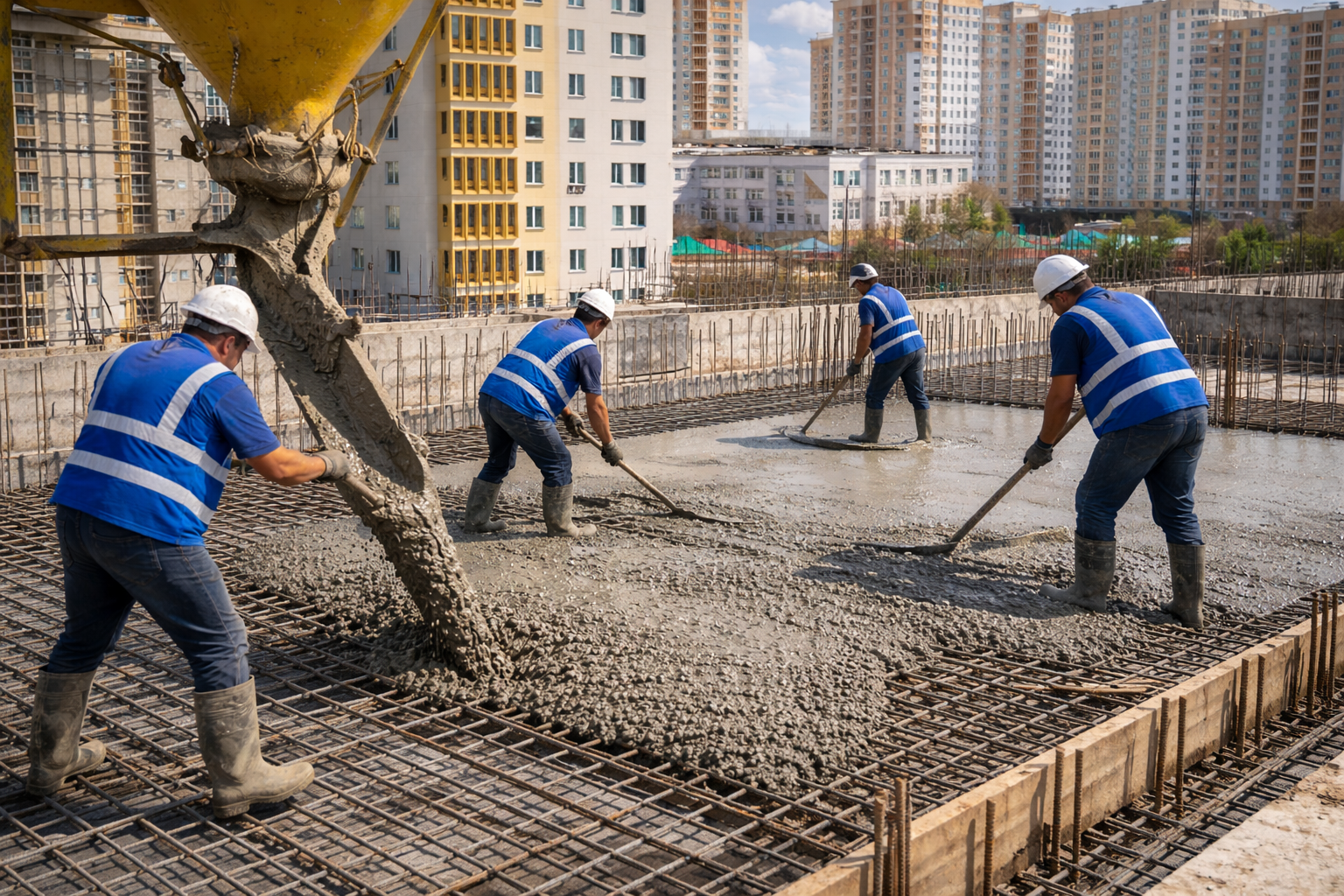
For facilities planning epoxy floors or adhesives, All Phase concrete often recommends a calcium chloride or relative humidity test before final coating selection. If test values exceed the coating manufacturer’s recommendation, options include a thick moisture-tolerant topping, a vapor-reducing primer system, or, in some cases, full replacement of the slab under the area to be covered. Each path has costs and time impacts; the right choice depends on the owner’s tolerance for downtime and long-term maintenance.
Reinforcement and jointing: practical decisions Reinforcement choices include fiber reinforcement, steel mesh, and traditional rebar. Macro synthetic fibers can reduce plastic shrinkage cracking and add post-crack toughness, often allowing thinner slabs or reduced steel quantities for cost efficiency. Welded wire mesh helps control cracking but must be placed at the correct elevation to be effective. For high loads and long-term restraint, doweled joints with adequate spacing are preferable to random contraction joints.
Jointing strategy is as important as reinforcement. Joint patterns should align with rack layouts, forklift aisles, and equipment locations. Joints placed where heavy turning moments occur will need details to avoid spalling — such as dowel bars and aggregate interlock — or even isolation joints when equipment transmits vibration. All Phase concrete works with facility engineers to convert operational drawings into joint plans that reduce future repairs and extend service life.
Environmental and corrosion concerns near the coast Salt air and chlorides are practical issues in tampa, especially for exterior pavements and areas close to the port. Chloride ingress accelerates reinforcement corrosion and concrete spalling if designs do not control permeability and cover depth. Specifying lower water-cement ratios, adding pozzolans, and ensuring adequate concrete cover over reinforcement are cost-effective protective measures.

For marine-adjacent projects, epoxy-coated reinforcement or stainless steel may be warranted, and surface-applied silane or siloxane treatments can help reduce chloride penetration. All Phase concrete assesses exposure risk and recommends targeted measures that address real vulnerabilities without overengineering.
Scheduling and minimizing downtime Industrial clients pay attention to schedules because downtime has a direct cost. All Phase concrete approaches scheduling by breaking work into discrete pours and using rapid-strength materials where safe. In renovation scenarios, patching and repair are staged so critical access lanes remain open. In new construction, pours are sequenced to allow interior trades to follow within predictable windows.
Practical scheduling also recognizes weather. Florida’s rainy season concentrates wet days into months. Contingency plans include covering freshly placed concrete during afternoon showers, using rapid-evaporation retarders when the forecast is hot and dry, and shifting the timing of pours to minimize the risk of cold joints. These are small choices that avoid rework.
Quality control on site Quality control starts before trucks arrive. Mix designs are reviewed against project specifications, subgrade preparation is checked for compaction and drainage, and joint layouts are pegged against as-built utility locations. During pours, slump, air content, temperature, and cylinder breaks are monitored. Finishing crews maintain sequence discipline to prevent overworking the surface, which can lock in weakness.
All Phase concrete also performs flatness scans and moisture tests when required. That documentation is useful not just for warranty claims but for future facility managers who may need to plan overlays or expansions. Having baseline data reduces surprises down the road.
Repair strategies and life-cycle thinking The smarter choice on many industrial sites is to repair and maintain rather than replace. Selective full-depth repairs restore structural capacity where needed. Overlays and bonded toppings can renew surface flatness and abrasion resistance for a fraction of slab replacement cost. However, overlays are only as good as the bond to the existing slab; preparing the substrate by shot blasting or milling is a non-negotiable step.
There are trade-offs. A bonded overlay reduces downtime and material use, but if the existing slab has moisture issues or severe structural deterioration, replacement may be more economical over 10 to 20 years. All Phase concrete helps owners weigh those scenarios with cost projections and timelines, not slogans.
Casework and coordination with other trades Industrial concrete work does not happen in isolation. Electrical conduits, plumbing penetrations, and embedded anchors must be located precisely. Miscoordination adds delays and cost. All Phase concrete emphasizes field verification meetings and markups, and they produce coordinated sleeve and embed lists to minimize surprises. These logistical practices are simple but have outsized effects on schedule adherence and final quality.
Choosing a contractor: a short checklist Pick a contractor with an organized approach to industrial scheduling, documented quality control, and experience with similar exposure conditions. Confirm they will provide written mix designs, on-site testing data, and a jointing plan that ties to your operational layout. Evaluate their references for projects completed in climates and traffic conditions similar to yours, and ask how they handle warranty items and long-term maintenance.
Cost, warranties, and what to expect Cost should be considered over a facility life span rather than only as a first bid. Cheaper initial prices may cut corners on mix design, vibration practices, or curing, leading to earlier repairs. Reputable firms like All Phase concrete offer warranties tied to workmanship and often specify maintenance intervals to preserve that warranty. Read warranty scopes carefully for exclusions, especially regarding chemical exposure and heavier-than-expected loads.
Final thoughts for facility owners Industrial concrete is a system: materials, joints, reinforcement, traffic planning, and maintenance protocols all interact. The best outcomes come from contractors who think systemically, coordinate closely with owners and engineers, and document decisions so future teams can diagnose and maintain the floor.
Owners in tampa face unique conditions: high humidity, salt exposure in some zones, and a climate that concentrates weather risks seasonally. All Phase concrete translates years of regional experience into practical recommendations — not extravagant promises, but predictable performance. When the goal is to keep operations moving and capital costs productive for decades, that predictability pays for itself.
If you are planning a new warehouse, upgrading a manufacturing floor, or facing persistent slab problems, prioritize a partner who can demonstrate practical experience, provide on-site testing and records, and build a plan that balances durability, schedule, and long-term cost. For industrial concrete services in tampa fl, that blend of local knowledge and disciplined execution is where value is created.